







Master System Design

"Design Instagram."
You Have 45 Minutes.

Do you freeze? Or do you have a systematic framework?

Hosted by System Thinking Lab

This course teaches the 7 universal building blocks that let you design any system—Instagram, Netflix, Uber—without guessing.

The same framework taught at UC Berkeley. The same patterns used by engineers at LinkedIn, Meta, and Google.

Pass interviews. Contribute to architecture. Command AI agents with precision. No coding required to understand the concepts.

✓ Join 75+ engineers already enrolled

Next cohort starts Sunday

Loading...

Full course access immediately - cohort is for tackling the material together

Watch Free Preview

Or 4 payments of $75/mo

Full access immediately • 7-day money-back guarantee

Proven Teaching Excellence

What students and colleagues say about Kay's teaching

"

The way Kay integrates AI tools into his teaching gave me the confidence I once had in software development.

— Student

"

The way Kay teaches software development has helped me use tools like Claude Code more effectively.

— Student

"

He is an inspiring role model for leadership in the tech industry, combining technical excellence with a supportive approach.

— Former Student

"

Kay has that rare gift of not only demonstrating deep expertise in his field, but also being able to communicate his insights in a way that is understandable to wide audiences.

— Former Colleague

"

[Professor Kay] has this incredible ability to make any complex technical challenge seem very simple.

— Former Student

"

Kay is deeply committed to creating an inclusive, supportive learning environment. His approachability and genuine care make him an invaluable resource, especially for those aspiring to advance in software engineering.

— Former Student

Who This Course Is For

System thinking isn't just for senior engineers. It's the universal skill that transforms how you work with technology.

Engineers

"Answer any 'Design X' interview question systematically."

Stop freezing. Stop guessing at technologies. Learn the framework that turns "Design Instagram" from panic moment to structured conversation.

Data Scientists & ML Engineers

"Ship your models to production without waiting for engineers."

Your model is 5% of the system. Learn the other 95%—the infrastructure that gets your work into production without a 3-month dependency.

Bootcamp Graduates

"Answer the system design questions bootcamp didn't teach you."

You can build a CRUD app. But can you scale it to a million users? This is the gap that separates bootcamp grads who get hired from those who don't.

NEW

Learn With a Cohort, Not Alone

Every Sunday, a new cohort starts together. You'll learn alongside peers tackling the same material.

💬

Cohort Discussions

Every lesson has a discussion thread. Ask questions, share insights, and learn from your cohort's perspectives.

👥

Small Cohorts

Intentionally small groups so everyone gets heard. You'll recognize names and build connections as you progress.

Still Self-Paced

No mandatory live sessions. Complete lessons on your schedule while staying connected to your cohort.

Next cohort starts Sunday

Loading...

Full course access immediately upon purchase

The Transformation You're Paying For

Before and after—including what happens next.

Before This Course

In interviews:

"Design Instagram"

*freezes, guesses at MongoDB vs PostgreSQL*

"We'll be in touch." (You never hear back.)

With AI agents:

"Build me a social media app"

*AI guesses, results vary wildly*

You spend hours debugging AI's assumptions.

Career trajectory:

Stuck at the same level. Watching others get promoted.

After This Course

In interviews:

"Design Instagram"

"Service for API, Relational DB for users, File Store for photos, KV Store for feed cache, Queue + Worker for processing."

"When can you start?" (You negotiate the offer.)

With AI agents:

"Service for REST API, Relational Database for users, Key-Value Store for sessions with 24h TTL..."

AI implements exactly what you need. First try.

Career trajectory:

Promoted. Better offers. "You think like a senior engineer."

Why This Course?

There's plenty of free content on system design. Here's why this is different.

A Framework That Doesn't Exist Elsewhere

YouTube videos teach you about Redis. Blog posts explain Kafka. But where's the systematic framework that ties it all together?

7 building blocks. Every system. Same patterns.

This framework was developed over 10 years of teaching at UC Berkeley. You won't find it in a Medium article.

Feedback On Your Thinking

Free resources teach you concepts. They don't tell you if you're applying them correctly.

This course includes AI-powered feedback on your assessments and design challenges.

Submit your Instagram design. Get specific feedback on what you got right, what you missed, and why.

A Rare Combination

20+ years building commercial software at scale.
10+ years teaching at the university level.

Most practitioners can't teach. Most teachers haven't built.

This course is designed by someone who's done both—and knows how to make complex systems click.

Built for Everyone Who Works With Software

This framework is deliberately technology-agnostic.
No code. No syntax. Just patterns.

For Non-Engineers:

You don't need to know Python, JavaScript, or any programming language.

The 7 building blocks are concepts, not code. If you can understand "photos need to be stored somewhere" and "users need to log in," you can learn this framework.

For Experienced Engineers:

You already know Redis, Postgres, and Kafka. So why do you need this?

Because AI agents speak natural language.

"Use Redis for caching" means nothing to Claude or Cursor. But "Key-Value Store for session data" maps directly to what AI agents understand. This framework is the bridge between your knowledge and AI's capabilities.

Why System Thinking Matters Now

The Traditional Path

System thinking used to take 3-5 years to develop through experience. AI tools changed everything—they handle implementation, but architectural decisions still require human judgment. The old gradual path doesn't match today's pace.

Your Path Forward

This course gives you the pattern recognition and architectural decision-making framework that makes you effective immediately. Learn the seven building blocks that power every system, so you can contribute to architectural discussions—not in years, but in weeks.

Two Types of Technical People

Which one do you want to be?

Guesses at Architecture

  • Freezes in "Design X" interviews
  • Tells AI "build me an app" and hopes
  • Nods along in architecture meetings
  • Waits for senior engineers to decide
  • Stays stuck at the same level

Thinks in Systems

  • Answers "Design X" systematically
  • Commands AI with precise architecture
  • Contributes to architecture discussions
  • Makes decisions, explains trade-offs
  • Gets promoted, gets better offers

This course transforms you from left to right.

The Universal Framework You'll Master

These 7 building blocks compose Instagram, Netflix, Uber, Gmail, and every other system you've ever used

Task Building Blocks

Service Service - Request/response processing
Worker Worker - Background processing

Storage Building Blocks

Key Value Store Key Value Store - Caching and fast lookups
File Store File Store - Media and large file storage
Queue Queue - Message processing and task management
Relational Database Relational Database - Structured data with relationships
Vector Database Vector Database - AI integration and similarity search

The Power of Universal Building Block Abstraction

What takes senior engineers years to intuitively understand, you'll learn systematically in weeks

From Intuition to Empirical Knowledge

Senior engineers have spent 3-5 years building intuitive connections—recognizing that Instagram's feed system shares fundamental patterns with Netflix's recommendation engine, or that Uber's dispatch system uses the same building blocks as Slack's messaging infrastructure. They've made these connections through trial, error, and countless architectural decisions.

This course codifies that intuition into empirical, studyable patterns. Instead of waiting years to stumble upon these connections through experience, you learn them systematically. The seven building blocks aren't just categories—they're the universal interface patterns that power every system, from Instagram to Gmail to Uber.

You'll study exactly when to use a Queue versus a Relational Database, why Instagram needs both a Key-Value Store and a File Store, and how Netflix combines these patterns to deliver video at scale. This is senior-level pattern recognition, taught empirically instead of discovered slowly through experience.

The Traditional Path: 3-5 Years

  • Learn by trial and error across multiple projects
  • Build intuition slowly through repeated exposure
  • Make connections organically over time
  • Develop pattern recognition through experience
  • Hope you encounter the right architectural problems

This Course: Weeks of Focused Study

  • Learn universal patterns systematically and empirically
  • Study proven architectural decisions from real systems
  • Master interface pattern thinking through structured lessons
  • Develop immediate pattern recognition capabilities
  • Understand the complete architectural landscape in weeks

Why This Matters Now More Than Ever

The AI era changed everything. AI tools like Cursor, Claude Code, Windsurf, and GitHub Copilot can write code, implement features, and even debug basic issues. Teams now expect junior engineers to contribute at higher levels from day one—not just writing code, but understanding why architectural decisions matter and when to use which patterns.

You can't wait 3-5 years to develop architectural thinking anymore. The timeline compressed. Teams need engineers who can make system-level decisions and explain trade-offs immediately. This course gives you that capability in weeks instead of years.

Learn the universal building blocks. Master the patterns that AI can't replicate. Become the engineer teams need in the AI era—one who makes architectural decisions, not just writes code.

See How Universal These Patterns Really Are

Watch our free 8-minute preview where we solve the Instagram Story Problem systematically. You'll see exactly how system thinkers map requirements to building blocks—no guessing, no random technology choices. Watch the transformation from "Should I use MongoDB or PostgreSQL?" to "Here's the systematic approach that works for any system."

Watch Free Preview

About Your Instructor

Kay Ashaolu

Continuing Lecturer, School of Information | Engineering Manager

Elite Academic & Industry Background

B.S.E. Electrical Engineering (Computer Systems) from Princeton University. M.I.M.S. (Master of Information Management & Systems) from UC Berkeley. 10+ years teaching at UC Berkeley School of Information. 15+ years engineering experience and 5+ years engineering management experience. Research focus on accelerated professional growth for early-career software engineers. Industry experience at Pinterest, Centers for Medicare and Medicaid Services, AncestryDNA, and Morgan Stanley.

Kay brings a unique combination of elite academic training and real-world engineering leadership. With over a decade teaching full-stack web architecture at UC Berkeley and managing engineering teams at Pinterest, he understands exactly what skills separate code writers from system thinkers.

His research focuses specifically on accelerating professional growth for early-career software engineers—the exact challenge this course addresses. After working as a software engineer at Centers for Medicare & Medicaid Services, AncestryDNA, and Morgan Stanley, and later leading engineering teams at Pinterest, Kay recognized that junior engineers need systematic frameworks, not just years of experience.

This course series represents his proven framework for developing architectural thinking skills. Through years of teaching and mentoring at UC Berkeley, Kay distilled complex system design into universal building block patterns that work across every platform from Instagram to Netflix to Uber.

Complete Course Series

Master system thinking across all domains through progressive specialization

AVAILABLE NOW
Course I

Systems Thinking in the AI Era I: The Seven Building Blocks

📅 10 weeks
|
⏱️ 1-2 hours/week

Master the 7 building blocks + 3 external entities that compose every system. Learn pattern recognition and architectural decision-making through interactive labs and real-world challenges.

Includes: 12 video lessons, 2 interactive Python labs, comprehensive assessment, 3-part system design challenge
$299

or 4 payments of $75/mo

Interview prep: $500-$2,000 · Bootcamps: $10,000+ · The raise you'll negotiate: $20K+/year

7-day money-back guarantee

COMING IN 2026
Course II

Systems Thinking in the AI Era II: Content Systems

Apply building blocks to Instagram, Netflix, YouTube patterns. Master read-heavy workloads, caching strategies, and CDN patterns for global content delivery.

Includes: 12 video lessons, 2 interactive Python labs, comprehensive assessment, 3-part system design challenge
Case Studies: Blog applications, video streaming platforms, photo galleries, search engines, AI-enhanced semantic search
Coming Soon
Requires Course I completion
COMING IN 2026
Course III

Systems Thinking in the AI Era III: Real-Time Systems

Learn Slack, Discord, WhatsApp patterns. Master real-time messaging, WebSocket patterns, presence systems, and message delivery guarantees.

Includes: 12 video lessons, 2 interactive Python labs, comprehensive assessment, 3-part system design challenge
Case Studies: Social media platforms, collaborative documents, messaging apps, AI chatbots, video conferencing, link shorteners
Coming Soon
Requires Courses I & II
COMING IN 2026
Course IV

Systems Thinking in the AI Era IV: Business Integration Systems

Master Stripe, Shopify, Salesforce patterns. Learn payment processing, transaction handling, compliance automation, and enterprise integration.

Includes: 12 video lessons, 2 interactive Python labs, comprehensive assessment, 3-part system design challenge
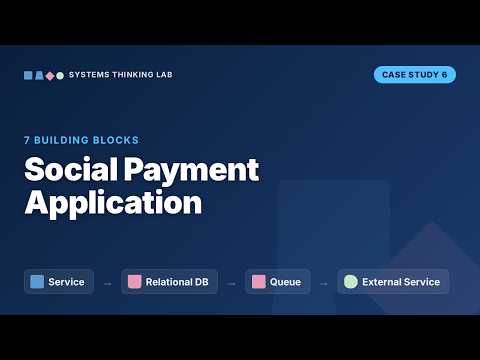
Case Studies: Social payment applications, online store platforms, auction marketplaces, dynamic pricing systems
Coming Soon
Requires Courses I, II & III

This Isn't Just Another Video Course

Experience a revolutionary learning system that combines interactive labs, real-world case studies, AI-powered assessment, and hands-on design challenges

No other course offers this depth of interactive learning at this price

🧪

Interactive Discovery Labs

Don't just watch—experience the power of building block combinations. Run real Python labs where you experiment with:

Queue+ Worker patterns Service+ Key-Value Store optimizations File Store+ CDN strategies

Feel the difference when a synchronous process blocks users versus when a Queue + Worker handles it asynchronously. See response times change from seconds to milliseconds with Key-Value Store caching.

🏗️

Real-World Case Studies

Deconstruct Instagram, Netflix, Uber, and Gmail using building blocks. See exactly which patterns power each feature, why engineers chose specific combinations, and when to use each approach.

Instagram Feed:

Service API + Relational DB posts + Key-Value Store feed cache + File Store images

Learn the systematic thinking that powers billion-user systems—not through memorization, but through empirical pattern analysis.

🤖

AI-Powered Personalized Assessment

This changes everything about online learning. Your short-answer responses aren't just graded—they're analyzed by AI that provides personalized, detailed feedback on your architectural reasoning.

Traditional Courses: Multiple choice only. No feedback on your reasoning. Binary right/wrong with no explanation of why.
Recommended ✓ This Course: Write full technical explanations. AI analyzes your architectural reasoning and provides specific feedback on trade-offs, edge cases, and improvements.

Example: Explain why you'd choose Queue + Worker for email notifications. AI evaluates your reasoning about asynchronicity, failure handling, retry logic, and scalability—then provides targeted feedback to strengthen your architectural thinking.

🏆

The Three-Part Design Challenge: Your Capstone Experience

The most valuable learning experience—design real systems, get AI feedback, iterate, and improve

How It Works:

Part 1: Build

Design the MVP. Select building blocks, explain trade-offs, create your architectural diagram.

Part 2: Scale

System goes viral! Address performance bottlenecks, add caching, scale your initial design.

Part 3: Innovate

Platform stable. Add advanced features: AI recommendations, real-time analytics, premium tiers.

📝 Write Complete Technical Design Documents

This isn't a quiz—it's professional system design work. For each part, you'll:

  • Select building blocks and explain why each one belongs in your architecture
  • Describe data flows through your system using building block interfaces
  • Analyze trade-offs between competing approaches (Queue vs Database, Key-Value Store vs Relational)
  • Address scalability and performance considerations at every layer
  • Justify every decision with systematic reasoning, not guesswork

🔄 AI Feedback + Iteration Loop

Here's where it gets revolutionary: Submit your design. AI analyzes your architecture, evaluates your building block choices, assesses your trade-off reasoning, and provides detailed, actionable feedback.

Example Feedback: "Your Queue + Worker pattern for image processing is solid, but consider what happens if Worker crashes mid-processing. How do you handle retry logic? Also, your Key-Value Store cache doesn't account for cache invalidation when posts are edited. Think about cache consistency strategies."

Then improve your design based on feedback. Resubmit. Get more feedback. Iterate. This is how senior engineers learn—through critique, revision, and systematic improvement.

Enterprise-Level Training at an Accessible Price

For $299, you get interactive labs with real code, case study deconstructions of billion-user systems, AI-powered feedback on your architectural reasoning, and hands-on design challenges with iterative improvement loops.

Why the Building Blocks Approach Works

Technology-Focused Learning

  • Learn specific technologies (React, Node.js, MongoDB)
  • Focus on implementations and syntax
  • Wait 3-5 years for system thinking to develop
  • Re-learn as frameworks evolve
  • AI handles most implementation tasks

Building Blocks Approach

  • Learn universal interface patterns
  • Master architectural pattern recognition
  • Develop system thinking systematically
  • Skills remain timeless across technology changes
  • Direct AI with architectural understanding

AI is a powerful tool. This course teaches you to direct it with the architectural thinking that makes systems work.

Frequently Asked Questions

What is Systems Thinking in the AI Era?
Systems Thinking in the AI Era is a 4-course series that teaches the universal framework for understanding how systems work. You'll master 7 universal building blocks + 3 external entities through hands-on discovery labs, real-world case studies, and system design challenges. Whether you're an engineer, data scientist, or technical leader, this develops the architectural decision-making skills that let you direct AI tools effectively.
How many courses are in the series?
4 courses total: I: The Seven Building Blocks (available now), II: Content Systems (coming soon), III: Real-Time Systems (coming soon), IV: Business Integration Systems (coming soon). Course I is the required foundation for all other courses.
What are the 7 universal building blocks?

The 7 universal building blocks are:

Task Blocks
Service
Service
Request/response
Worker
Worker
Background processing
Storage Blocks
Key-Value Store
Key-Value Store
Caching & fast lookups
File Store
File Store
Media storage
Queue
Queue
Messaging
Relational Database
Relational Database
Structured data
Vector Database
Vector Database
AI/similarity search

These interface patterns power Instagram, Netflix, Uber, Gmail, and every system you use daily.

How does system thinking help me work with AI?
AI tools excel at implementation but require human guidance for architectural decisions. System thinkers understand when to use which building block patterns, how to compose them for specific requirements, and how to evolve systems over time. This high-level thinking lets you direct AI tools effectively—you make the architectural decisions while AI helps with implementation.
How much does the course series cost?
Each course is $299. Start with the free 8-minute preview to experience the transformation, then enroll in I: The Seven Building Blocks (available now). Additional courses can be purchased individually as you progress through the series.
Do I need programming experience?
Yes, you should be comfortable reading and understanding code. The course focuses on system design and architectural thinking rather than teaching programming fundamentals. If you can implement features but struggle with architectural decisions like "How would you design Instagram?", this course is perfect for you.
How much time does Course I take to complete?
Course I is designed as a 10-week cohort experience, with 1-2 hours of content per week. This includes 12 video lessons, 2 interactive Python labs, comprehensive assessment, and a 3-part system design challenge. The course is self-paced—you can move faster if you'd like, but the cohort structure encourages steady progress alongside peers. All content remains accessible forever.
What is the cohort system?
Every Sunday, a new cohort of students starts the course together. You'll have access to cohort discussions where you can ask questions and share insights with peers tackling the same material. This creates accountability and community without mandatory live sessions—the course remains fully self-paced.
Do I get immediate access to the course?
Yes! You get full access to all course content immediately upon purchase. The cohort system is purely for community and learning together—it does not gate any content. Start learning right away, and connect with your cohort when you're ready.

Start Your Transformation Today

Engineers, data scientists, and technical leaders who understand system architecture don't just use AI tools—they direct them. They understand architectural patterns, make systematic design decisions, and think in terms of universal building blocks that compose every system.

This course series gives you that foundation, starting with the 7 universal building blocks + 3 external entities that you'll use throughout your career.

Course I: Universal Building Blocks

$299

15 components • Interactive labs • Assessment • Challenge

Next cohort starts Sunday

Loading...

Watch Free Preview

Or 4 payments of $75/mo

Full access immediately • 7-day money-back guarantee